

Learning eXchange Track:
Software Development using AI
Overview
AI is reshaping software development strategies by automating routine coding work,
accelerating testing and deployment,
and enabling teams to focus on higher level design and
innovation through intelligent, adaptive tooling.
Schedule for the Software Development Track (all sessions in Congdon Hall 1013)
- 9:00 a.m. - Engineering in an AI-Native World: What changes and What Doesn't, Sara Izad, nCino
- 10:25 a.m. - Software Change Lifecycle - What AI Changed (and didn't), Douglas Flagg, Fidelity Investments
- 12:35 p.m. - From AI User to AI Builder: Creating an Intelligent Agent, Ian Norris, nCino
- 2:00 p.m. - Context Engineering and Real World Problems, Thomas Lovette, Eron Neill, Vantaca
Software Change Lifecycle - what AI changed (and didn't) about how we develop software
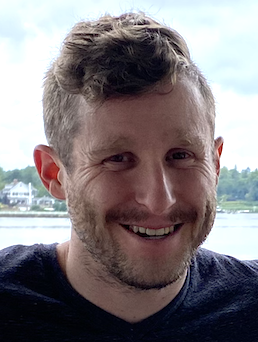
Douglas Flagg
Director Cloud Engineering
- Bio: Doug graduated from UNCW in 2013 with a degree in Computer Science. His first development role was working as a student web developer for UNCW while still completing his undergraduate degree. Doug has worked at both Citrix Systems as a Site Reliability Engineer and at Fidelity Investments as a Software Engineer in the past. His role is now Director Cloud Engineering at Fidelity where he focuses on making it easier for Fidelity's development teams to use public clouds and encouraging best practices for infrastructure as code. He also acts as the technical lead for his development team where he works to ensure software changes are delivered effectively and maintainable.
-
Session Details:
Software Engineering is the application of Programming over time. The distinction is
Programming is the act of writing a piece of software that does some task, Software
Engineering is taking that software and engineering it in such a way that it scales to for example
millions of users. AI has certainly made programming a far simpler task but how else
has AI aided the other aspects of Software Engineering through the Software Change Lifecycle?
This session will explore through the Software Change Lifecycle where AI has made an impact, what remains unchanged, what is more essential than ever and what can safely be delegated to AI. We do this by comparing how one software delivery team at Fidelity Investments worked prior to the introduction of AI capabilities with how we now deliver with the help of AI.
Step by step we will follow a software change from inception throughout its entire lifecycle, including where AI made a difference:- ADRs or how we make technical decisions
- Scrum & fractals or how we organize
- Story creation, refinement and planning or how we set goals
- Development & testing or how we implement
- Review & CI or how we ensure quality -
- Deployment, Release & Documentation or how we deliver changes -
- Deprecation or how we responsibly sunset
This session is aimed at giving soon-to-be and new graduates a sneak peek into how one team delivers software end to end. For experienced professionals there will be examples to take away like new ways of organizing or making decisions as a team.
Engineering in an AI-Native World: What Changes and What Doesn't

Sara Izad
- Director of Engineering – Data & AI
- nCino
-
Sara_Izad@LinkedIn
-
Bio:
Sara Izad is the Director of Engineering, Data & AI at nCino. She is responsible for leading the strategy and development
of nCino's data and intelligence platforms, including the company's AI infrastructure, data and platform engineering,
and agentic capabilities, in support of nCino's goal to become an AI-native company.
Sara has been with nCino for over seven years, progressing from Lead Software Engineer through architecture and platform leadership roles, and has spent her career at ISV companies navigating major technology transitions from on-premises to cloud to AI.
-
Session Details:
AI is writing more code every day—cleaner, faster, and increasingly complex code.
For engineers and students considering the field, this raises urgent questions:
What's the future of my role? Should I still pursue engineering? What skills actually
matter now?
nCino is building with AI daily across a 500+ person engineering organization serving 2,000+ financial institutions globally. Engineering has changed and yet it hasn’t. Join us to explore:
- What fundamental engineering skills matter more than ever (and which are commoditized)
- How AI is redefining what "good engineering" means—from code quality to system thinking
- Real examples from nCino's transition to AI-native development: what worked, what failed, and what surprised us
- Practical strategies for current engineers to stay relevant and maximize AI in their workflow
- Why students should still choose engineering—and how to prepare differently
Context Engineering and Real World Problems
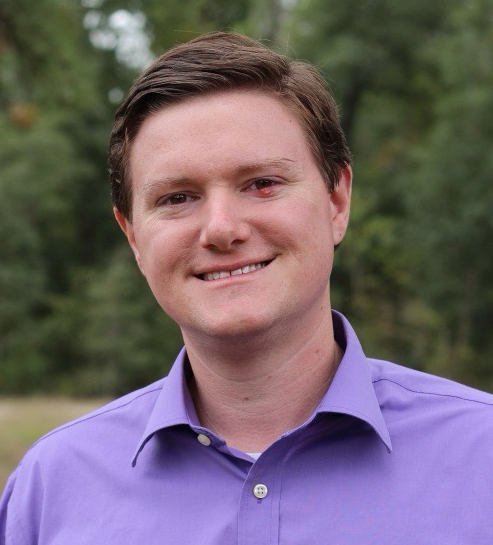
Thomas Lovette
Software Engineering ManagerVantaca
-
Bio:
Lovette is a local software development professional who specializes in application architecture and
engineering team management. He graduated from UNCW's Computer Science department in 2012 and has
worked in a variety of roles in the software development industry ranging from engineering to architecture to management.
Thomas has recently taken an active role in shaping the evaluation and implementation of modern generative
AI tooling in software applications, with a particular focus on leading teams to adopt the
latest innovations in AI-assisted development.

Eron Neill
Senior Software EngineerVantaca
Eron_Neill@LinkedIn
-
Bio:
Eron is a software engineer with a background data integration
and machine learning with a broad passion for science, mathematics,
and continual learning.
Outside of work and school he enjoys surfing, sailing, camping, and hobby projects.
-
Session Details:
How are today’s software development teams dealing with the new capabilities—and expectations—that generative AI
tools introduce into a business?
Thomas Lovette and Eron Neill share insight into how rapidly-evolving world of agentic software development is changing how teams work together and as part of a larger business
From AI User to AI Builder: Creating an Intelligent Agent

Ian Norris
- Senior Software Engineer
- nCino
-
Ian_Norris@LinkedIn
-
Bio:
Ian is a UNCW alumni who graduated in 2020 with a degree in Computer Science.
He began his career shortly after as a Software Engineer, eventually moving to nCino
where he has worked for over three years. Since joining nCino, he has been instrumental
in creating their data platform, enabling data intelligence in banking workflows, and now
focuses on artificial intelligence. Currently, he is helping nCino build and scale intelligent
agents within their bank operating systems.
-
Session Details:
Evolve from AI user to AI builder in this hands-on workshop where you'll
create your own intelligent agent from scratch. Move beyond simple chatbots
to build AI that can maintain context, use tools, and make decisions autonomously.
Working with a modern agentic framework, you'll learn the fundamentals of agent design through rapid prototyping. We'll build a functional agent that can reason through problems, access external capabilities, and handle multi-step tasks.
The session covers the complete journey from concept to deployment: starting with core agent patterns, implementing memory and tool use, and scaling from prototype to production-ready systems. You'll leave with working code, practical knowledge of agent architectures, and a clear roadmap for building sophisticated AI assistants.
- Hands On Session: Bringing a laptop (with Python installed) with you will make this session more benefical
Learning eXchange Software Development Track Coordinator: Shauna White Makaya Moster